
How to Meal Prep for the Week: A Practical Guide for Home Cooks
Learn how to meal prep for the week without spending all Sunday in the kitchen. This beginner-friendly guide covers component prep, a 20-minute planning workflow, fridge and freezer leftover storage times, reheating tips, and a sample 5-day plan you can repeat.
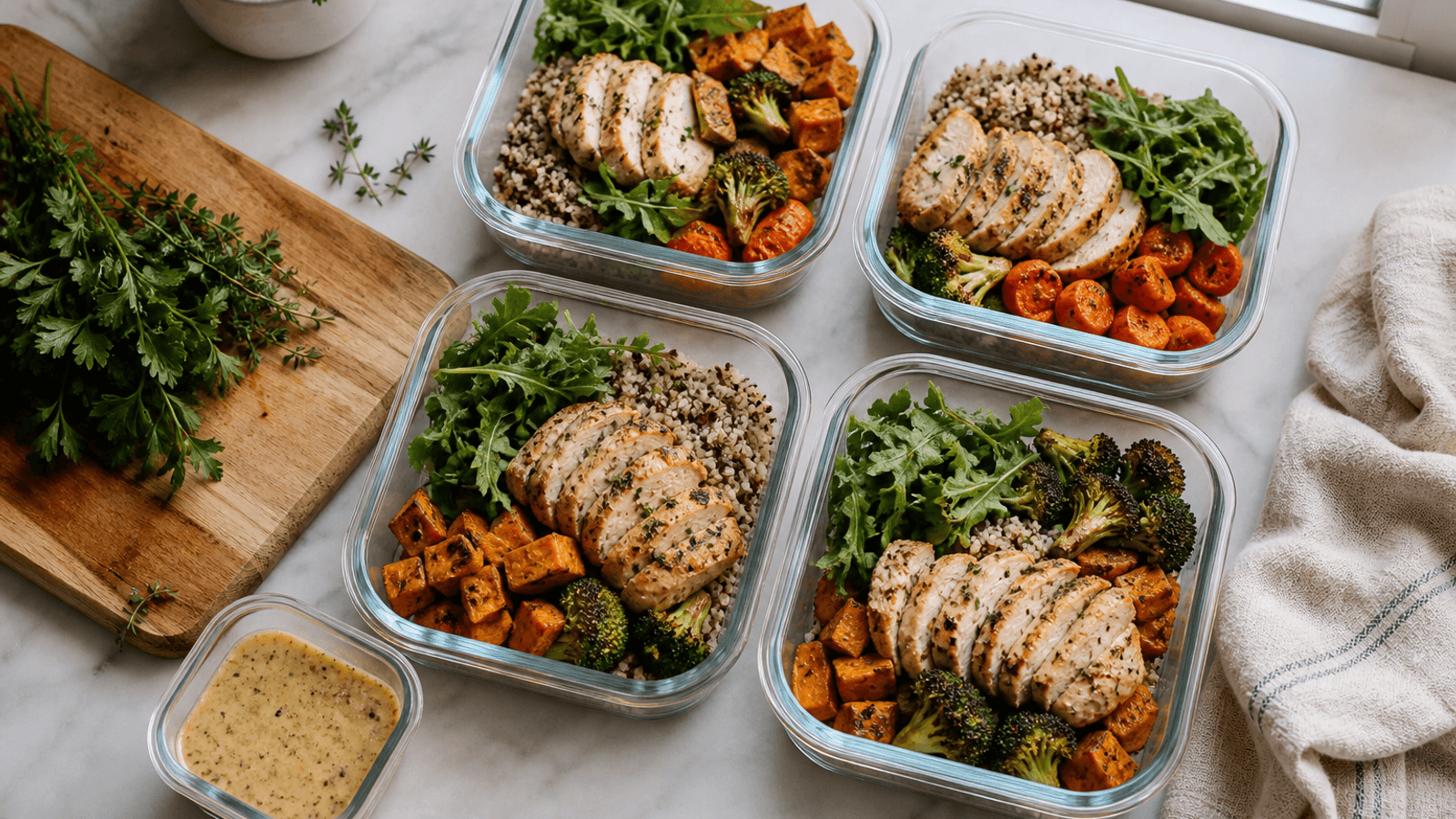
Meal prep is the habit of cooking once so you can eat well for several days. You do not need matching containers of the same chicken and broccoli, and you do not need to spend an entire Sunday in the kitchen. The most reliable way to meal prep for the week is to cook a few flexible building blocks—proteins, grains, vegetables, and sauces—then mix them into different meals as the week goes on.
This guide shows you how to plan a week in about 20 minutes, what to cook ahead versus leave fresh, how long leftovers last in the fridge and freezer, and how to reheat food so it still tastes good on Thursday.
What Meal Prep Actually Means
There are two useful styles. Most home cooks do better with a mix of both.
Component prep means cooking ingredients, not finished plates. Roast a tray of chicken thighs, cook a pot of rice or quinoa, chop a pile of vegetables, and mix one or two sauces. During the week you assemble grain bowls, wraps, salads, and quick skillet dinners in minutes.
Full-meal prep means cooking complete dishes and portioning them into containers. Chili, soup, baked pasta, curry, and sheet-pan dinners work well this way because they reheat evenly and often taste better the next day.
Component prep keeps meals from feeling repetitive. Full-meal prep is faster on busy weeknights. Use full meals for two or three dinners, then rely on components for lunches and the remaining nights.
Why Weekly Meal Prep Works
A short prep session solves the problems that usually send people back to takeout:
- Time: Most of the chopping, roasting, and simmering happens once.
- Money: You shop from a list, use overlapping ingredients, and waste less produce.
- Decisions: Dinner is no longer an open-ended question at 6 p.m.
- Nutrition: You are more likely to eat the vegetables and proteins you already cooked.
The goal is not a perfect refrigerator of identical boxes. The goal is enough cooked food that a weeknight meal takes 10 to 20 minutes instead of an hour.
Plan Your Week in 20 Minutes
Do this before you grocery shop. A written plan is what keeps meal prep from turning into a random pile of leftovers.
1. Pick the shape of the week
Choose:
- 3 to 4 dinners you will actually eat
- 3 to 4 lunches (these can be leftovers or assembled bowls)
- Breakfasts that repeat (overnight oats, egg bites, yogurt and fruit)
- One flexible “use it up” night
Leave one night open for leftovers, eating out, or a very simple pantry meal. A plan with no slack is the plan that fails by Wednesday.
2. Choose overlapping ingredients
Look for recipes that share a protein, a grain, or a sauce. One batch of shredded chicken can become tacos, a grain bowl, and soup. One pot of quinoa or rice can stretch across lunches and dinners. If you cook with what is in season, produce lasts longer and tastes better—use our month-by-month produce guide when you build the list.
3. Scale the recipes to the people you are feeding
If a recipe serves 4 and you need 6 portions, scale it before you shop so you are not short on Tuesday. Cookbook Hub recipes can be saved into a cookbook and adjusted by servings so the grocery list matches the week you are actually cooking.
4. Write one grocery list
Group the list by store section: produce, proteins, dairy, pantry, frozen. Check what you already have. If you are missing an item, swap it instead of making an extra store run—our ingredient substitution guide covers the common ones.
5. Decide what happens on prep day
Write a short cook list, not a vague intention. Example:
- Roast chicken thighs
- Cook 3 cups dry rice
- Roast a sheet pan of vegetables
- Chop raw vegetables for lunches
- Mix a vinaigrette and a yogurt sauce
- Portion fruit and snacks
If the list has more than six tasks, you are trying to cook the whole week as finished meals. Cut it back to components.
What to Cook Ahead vs. Leave Fresh
Not everything belongs in a Sunday container.
Cook ahead
- Grains and sturdy starches: rice, quinoa, farro, roasted potatoes
- Proteins: chicken, turkey, tofu, beans, lentils, meatballs, hard-boiled eggs
- Roasted vegetables: broccoli, carrots, cauliflower, sweet potatoes, peppers
- Soups, stews, chili, curry, and braises
- Sauces and dressings in jars
- Overnight oats and baked oatmeal
Prep, but do not fully cook
- Salad greens: wash and dry, store with a paper towel
- Raw vegetables for snacking or last-minute sautéing
- Marinades on proteins you will cook midweek
- Burrito or wrap fillings kept separate from tortillas
Leave fresh
- Crispy foods you care about (breaded cutlets, fried items)
- Delicate herbs and avocado, unless you use them within a day
- Pasta you want al dente—cook the sauce ahead, boil the noodles when you eat
- Fish, unless you are eating it within 1 to 2 days
A good rule: if texture is the point of the dish, cook it closer to serving. If flavor improves as it sits, cook it on prep day.
A Simple Prep-Day Workflow
Set a 60 to 90 minute window. Work in this order so appliances stay busy and you are not waiting around.
- Start the longest cooks first. Oven at 400°F (200°C) for sheet-pan proteins and vegetables. Put grains or beans on the stove or in a rice cooker.
- Use the oven in parallel. One rack for protein, one for vegetables. Do not crowd the pans or everything steams.
- Chop while things cook. Wash greens, portion fruit, mix sauces.
- Portion and refrigerate promptly. Divide hot food into shallow containers and get it into the fridge or freezer right away. Leave lids slightly ajar in the fridge until steam stops, then seal. Do not leave food out on the counter to cool.
- Label everything. Name and date are enough. Future-you will not remember which container is Wednesday’s chicken.
- Store by how you will eat. Keep sauces separate. Pack bowls only if you like eating the same assembled meal. Otherwise store components and assemble in 5 minutes.
If you only have 45 minutes, cook one protein, one grain, and one tray of vegetables. That trio covers most lunches.
How Long Leftovers Last in the Fridge and Freezer
Food safety is the part of meal prep people skip, then regret. These time ranges assume food was portioned into shallow containers and refrigerated or frozen promptly. When in doubt, throw it out.
| Food | Fridge | Freezer | Notes |
|---|---|---|---|
| Cooked chicken or turkey | 3–4 days | 2–3 months | Shred before freezing for faster thawing |
| Cooked ground meat | 3–4 days | 2–3 months | Cool completely so fat does not trap heat |
| Cooked fish | 1–2 days | 2–3 months | Best eaten fresh; freeze only if needed |
| Hard-boiled eggs | 7 days | Not recommended | Keep in the shell until you eat them |
| Cooked rice or grains | 3–4 days | 2–3 months | Cool quickly; reheat until steaming |
| Cooked beans or lentils | 3–4 days | 2–3 months | Freeze in meal-size portions with a little liquid |
| Soups, stews, and chili | 3–4 days | 2–3 months | Leave headspace in freezer containers |
| Tomato-based pasta sauce | 3–4 days | 2–3 months | Freeze sauce; cook pasta fresh |
| Cooked pasta | 3–4 days | 1–2 months | Toss with a little oil so it does not clump |
| Roasted vegetables | 3–4 days | 2–3 months | Texture softens after freezing |
| Leafy salads | 1–3 days | Do not freeze | Dress right before eating |
| Cut fruit | 3–4 days | 2–3 months | Freeze for smoothies, not snacking |
| Cooked tofu | 3–4 days | 2–3 months | Press well before cooking so it keeps texture |
| Casseroles and baked pasta | 3–4 days | 2–3 months | Thaw overnight in the fridge |
USDA leftover guidance is the baseline: most cooked leftovers last 3 to 4 days in the refrigerator at 40°F (4°C) or below. Freeze anything you will not eat in that window.
How to Reheat Meal Prep Without Ruining It
- Grains: Sprinkle with a teaspoon of water, cover, and microwave. Or warm in a skillet with a splash of broth.
- Chicken and other lean proteins: Reheat gently with a lid so they do not dry out. A little sauce or broth helps.
- Roasted vegetables: A hot skillet or 400°F oven brings back browning better than the microwave.
- Soups and stews: Stovetop until bubbling. Stir so the bottom does not scorch.
- Rice: Reheat until steaming hot throughout. Do not leave cooked rice at room temperature.
- Crispy toppings: Add fresh—herbs, toasted nuts, crushed chips, or a fried egg—right before you eat.
If a leftover bowl tastes dull, it usually needs salt, acid, or crunch. A squeeze of lemon, a spoon of salsa, or leftover vinaigrette fixes more “boring meal prep” than a new recipe will.
Common Meal Prep Mistakes
Cooking seven identical dinners. You will be tired of them by day three. Prep components and change the sauce, garnish, or format.
Prepping food that does not keep. Fried chicken, guacamole, and dressed salad are poor Sunday projects.
Skipping the cool-down. Hot food in a sealed container gets watery and spends too long in the temperature danger zone.
No breakfast or snack plan. Hunger at 4 p.m. is when the grocery-store pastry wins. Portion fruit, yogurt, nuts, or cheese with the rest of the prep.
Overbuying produce. Leafy greens and herbs fade fast. Buy what the plan uses, and lean on seasonal produce that actually lasts.
Ignoring measurements when you scale. Doubling spices, salt, and leaveners is not always linear. When you adapt a recipe up or down, keep a kitchen conversion chart nearby and taste as you go.
Sample 5-Day Meal Prep Plan
This plan feeds about 2 adults for weekday lunches and dinners. Adjust portions to your household. Browse recipes for specific dishes, then drop the ones you like into a weekly cookbook.
Prep day (60–90 minutes)
- Roast 3 pounds of chicken thighs with olive oil, salt, and paprika
- Cook 2 cups dry rice or quinoa
- Roast one sheet pan of broccoli and sweet potatoes
- Simmer a pot of black beans or open and season two cans
- Mix a lime-yogurt sauce and a simple vinaigrette
- Wash greens and chop cucumbers, peppers, and onions
- Boil a half-dozen eggs if you want easy breakfasts
Monday
- Lunch: Rice bowl with chicken, roasted vegetables, beans, and vinaigrette
- Dinner: Chicken tacos with peppers, onions, and yogurt sauce
Tuesday
- Lunch: Leftover taco fillings over greens
- Dinner: Sheet-pan sausage or tofu with the remaining roasted vegetables (cook this fresh; it takes 25 minutes)
Wednesday
- Lunch: Grain bowl with beans, raw vegetables, and a jammy egg
- Dinner: Chicken fried rice using leftover rice, vegetables, and a fresh scramble of eggs
Thursday
- Lunch: Chicken salad wraps or stuffed pitas
- Dinner: Black bean soup or chili stretched with leftover chicken and a squeeze of lime
Friday
- Lunch: Clean-out bowls—whatever is left, plus a fresh sauce
- Dinner: Use-it-up night or a simple pasta with a pantry sauce
Breakfasts can stay boring on purpose: yogurt and fruit, overnight oats, or toast with eggs. Save the variety for lunch and dinner.
Keep the Plan in One Place
Meal prep falls apart when the recipes live in five apps, a screenshot folder, and a paper pile. Save the week’s recipes to a Cookbook Hub cookbook, scale the servings before you shop, and keep the same collection for next week so you are editing a system instead of starting from scratch.
If you like cooking from what you already have, start with recipes on the site that use grains, beans, and sheet-pan vegetables. Those are the dishes that survive a week in the fridge.
Meal Prep FAQ
How many days can I safely meal prep? Cooked leftovers are generally good for 3 to 4 days in the fridge. For a full 5-day work week, freeze Thursday and Friday portions on prep day, or cook one fresh meal midweek.
Is it better to meal prep breakfast, lunch, or dinner? Lunch gives most people the biggest payoff because it is the meal they are least willing to cook from scratch. Dinner components help on weeknights. Breakfast only needs to be repetitive and fast.
Can I meal prep if I only have an hour? Yes. Cook one protein, one grain, and one tray of vegetables. That is enough for several lunches. Add a sauce so the food does not taste the same every day.
What containers should I use? Shallow glass containers with tight lids are the easiest to reheat and do not stain the way plastic can. Use small jars for sauces. Leave space at the top if you freeze liquids.
How do I keep chicken from drying out? Choose thighs over breasts for prep, do not overcook, store with a little pan juice or sauce, and reheat covered. Slice only what you will eat that day.
Do I have to eat the same thing every day? No. That is the point of component prep. Change the format (bowl, wrap, salad, soup) and the sauce. The cooked ingredients can stay the same.
What should I freeze versus refrigerate? Refrigerate what you will eat in 3 to 4 days. Freeze soups, stews, cooked grains, shredded chicken, and extra sauce. Do not freeze dressed salads or foods you want crispy.
How do I meal prep for one person? Cook full recipes, then freeze extra portions immediately. A soup pot or a tray of chicken is still worth making; the freezer becomes your second fridge.
Final Thoughts
The best meal prep routine is the one you will repeat. Cook a few building blocks, store them safely, and leave yourself one easy night. Once the groceries, recipes, and leftovers live in the same plan, weeknights get quieter—and you still get a real dinner.
Want a week of recipes in one place? Save them to a cookbook, scale the servings, and reuse the same plan next week.